





 Okay, there’s been a lot in the media lately about fasting. Here’s my take on it based on research and what I learned at Food As Medicine.
There are amazing immune and cardiac benefits to fasting, in addition to weight loss. But, you must do it correctly. The benefits are so startling it is worth considering incorporating fasting into your lifestyle as a routine practice. The type of fasting I will talk about here is INTERMITTENT fasting, and specifically, the kind that only goes for 15-18 hours. According to the latest research, you get most of the benefits of a fast without the torture of not eating for long periods without eating.
 Intermittent fasting is:

- A 15-18 hour period of not eating (eg; eat dinner, then eat your next meal 15-18 hours later)
- done 1-2/week on average
- You can drink water, tea and coffee while you are fasting (non-calorie beverages – NO SODA)
People who intermittently fast get benefits in 14-18 hours. Here’s why: increased Autophagy. Autophagy is a normal physiological process in the body that deals with destruction of old/damaged cells and removal of unused proteins in the body. This increase in autophagy was common in our ancestors, who routinely had periods of fasting due to lack of food sources. In today’s society, we can eat 24/7. Without this “down time”, our systems don’t go into autophagy enough. Fasting promotes this, and depriving ourselves via fasting twice a week could significantly lower the risk of developing Alzheimer’s disease or Parkinsons. Pretty amazing!
Fasting and increased autophagy provide:
- Lower circulating glucose, and higher HDL, and lower triglyceride levels
- improved response to insulin, meaning you are more efficient and produce less insulin
- improved leptin sensitivity
- a lower toxic burden – your immune system recharges during fasting – studies have actually shown that old white cells are destroyed during fasting, and when you begin to eat again, your body makes new, strong white cells
- increased telomeres, the protective barrier on your chromosomes, which may increase lifespan
Mark Mattson, M.D., professor of neuroscience, Johns Hopkins School of Medicine says
“During each cycle of fasting, this depletion of white blood cells induces changes that trigger stem cell-based regeneration of new immune system cells. Prolonged fasting also lowered levels of IGF-1, a growth-factor hormone that has been linked to aging, tumor progression and cancer risk.”
Valter Longo, Professor of Gerontology/Biological Sciences at USC Davis School of Gerontology said:
“We could not predict that prolonged fasting would have such a remarkable effect in promoting stem cell-based regeneration of the hematopoietic system.”
So, the bottom line is try to incorporate intermittent fasting into your lifestyle for weight loss, wellness, immune strength and longevity.

Basic Guidelines for an Intermittent Fast:
- Pick a time period that works for you. Most people find it easiest to do it over the night/sleep hours (see graphic below)
- Eat clean when you do begin again.
- Start with as many hours (up to 18) as you can do, you can build up a tolerance.
- Don’t forget to drink tea or water during your fast, this helps keep you hydrated and will make the fast easier. Staying hydrated helps your kidneys flush out toxins.
- When you get hungry, think about what it means: it is a lot easier if you envision your body recharging it’s immune system vs. “I’m starving”.
- Check with your doctor before starting any major change to be sure that your meds don’t need to be adjusted, especially blood pressure meds and diabetic meds.
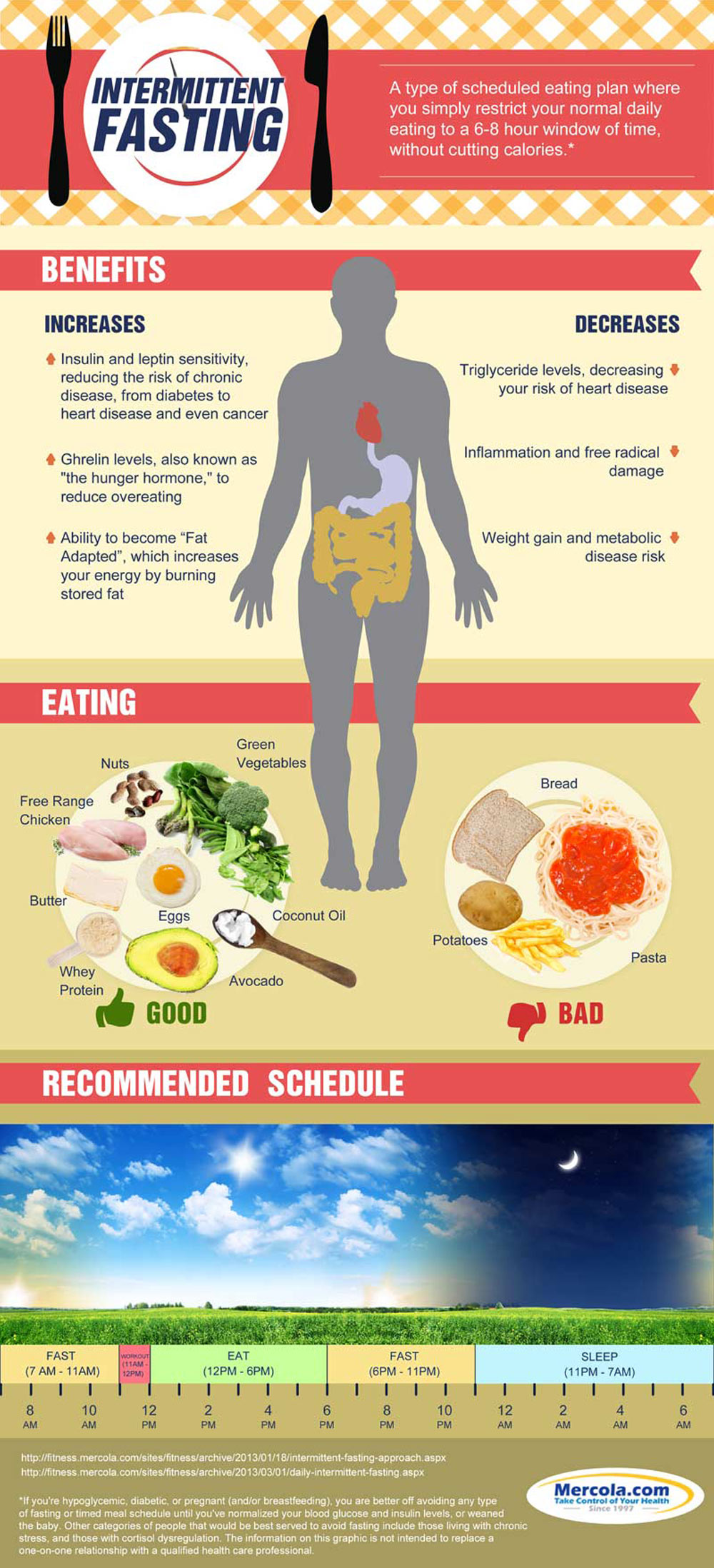
Want to Read more on this?
Articles:
Johns Hopkin’s Magazine: Don’t Feed Your Head
Fasting Triggers Stem Cell Regeneration of Damaged Immune Cells
US News: Does Intermittent Fasting Work?
Science Nerd? Here’s some actual research:
Alternate-day fasting and chronic disease prevention: a review of human and animal trials
The Effects of Intermittent Energy Restriction on Indices of Cardiometabolic Health
Short-term modified alternate-day fasting: a novel dietary strategy for weight loss and cardioprotection in obese adults
Effect of intermittent fasting and refeeding on insulin action in healthy men


Dr. Anton Kidess
June 22, 2015 at 12:24 pm
Hi Eileen, good post, just one caveat is that it is important sometimes to note that fasting and diet in general can affect medicines, and so it is important to check with “your” physician for advice when on long term medications, in particular, blood pressure medications and diabetes medications.
Tony Kidess
Time2Thrive
June 22, 2015 at 12:25 pm
You are right!! I will edit the post to reflect that.
Pingback: Bad-Better-Best: Coffee Creamer | Time2Thrive